How Can You Prevent Quality Issues in Imported Plastic Housewares?

As a sourcing manager, I lost $50,000 due to defective plastic containers. Let me share how we at Haixin prevent such disasters for our clients.
Preventing quality issues in imported plastic housewares requires a systematic approach: rigorous supplier audits, real-time production monitoring, strict material compliance, and third-party inspections. These measures ensure consistent quality and safety standards.
But how exactly do these strategies work in practice? Let’s break down each critical step to ensure your plastic housewares meet the highest standards.
What Quality Control Steps Ensure Durable Plastic Housewares?
Imagine receiving a shipment of warped storage bins. Frustrating, right? Here’s how we avoid such scenarios at Haixin.
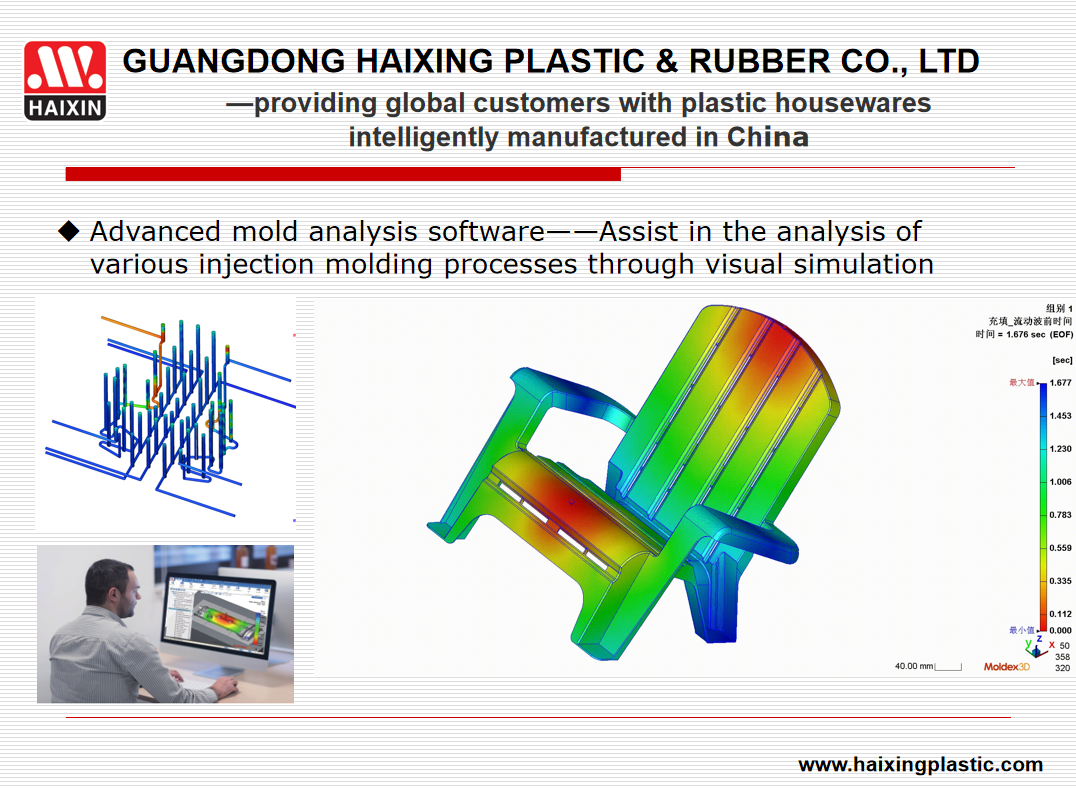
Durable plastic housewares require multi-stage quality control: raw material testing, in-process inspections, and final product checks. At Haixin, we use advanced tools like mold flow analysis to predict and prevent defects.
Quality control begins long before production starts. At Haixin, we start with raw material testing to ensure only FDA and LFGB-certified materials enter our production line. During manufacturing, our fully automated smart workshop monitors every step, from injection molding to cooling, to prevent warping or uneven thickness. We also have QC to check every hour during production.
For example, when producing MINISO’s bathroom series, we identified potential cooling issues through mold flow analysis, adjusting the process to eliminate defects. Our team conducts random sampling and stress tests post-production, ensuring products can withstand real-world use.
We also implement a unique "delayed packaging" strategy for complex orders, like Target’s 6-color mixed packaging. This allows us to inspect each component before final assembly, reducing the risk of defects in transit.
By combining technology with rigorous human oversight, we maintain a defect rate of less than 0.5%, far below the industry average of 2-3%.
How to Avoid Common Material Defects in Plastic Manufacturing?
Ever noticed cracks or discoloration in plastic products? These defects often stem from poor material choices. Here’s how we tackle this at Haixin.
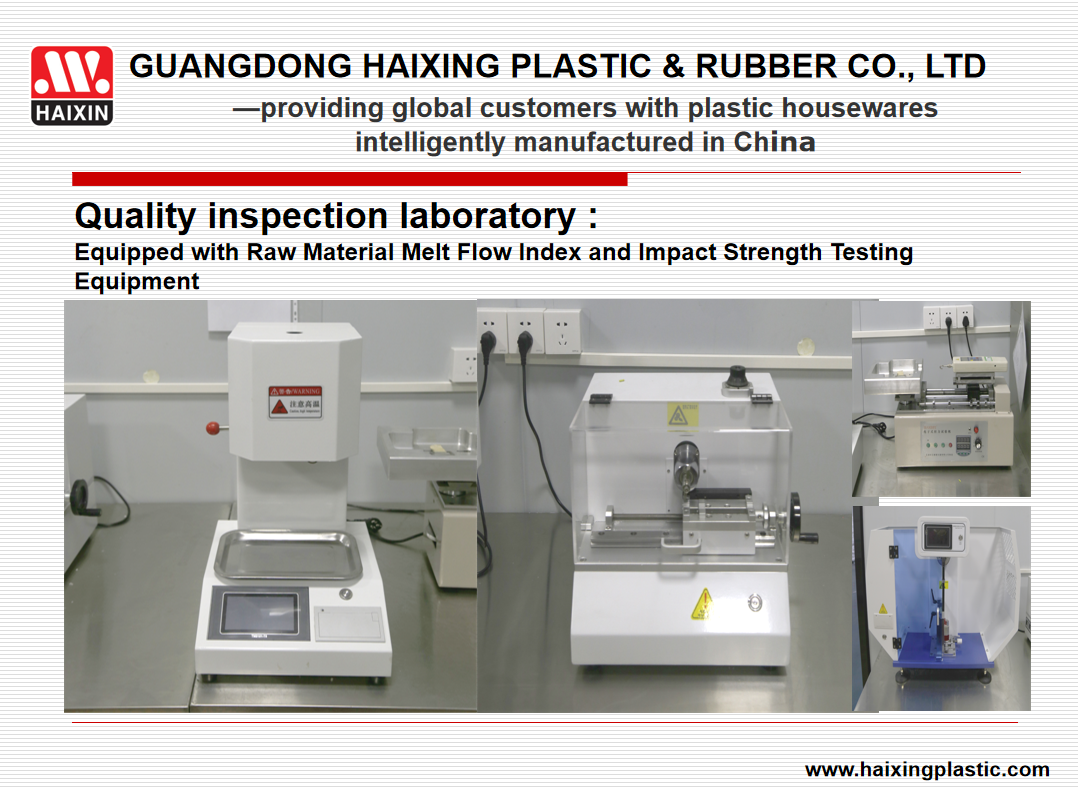
Avoiding material defects starts with selecting high-grade resins and additives. Our inspection room also has Raw Material Melt Flow Index and Impact Strength Testing Equipment to test the material before purchasing.
Material defects like cracking, warping, or discoloration are often caused by substandard resins or improper processing. At Haixin, we source only premium-grade materials from certified suppliers, ensuring consistency and durability.
For instance, our PET-specific workshop uses advanced drying systems to remove moisture from raw materials, preventing bubbles or weak spots in the final product.
To address common issues like warping, we use mold flow analysis to optimize cooling rates and gate designs. This ensures uniform thickness and minimizes stress points, resulting in products that maintain their shape even under heavy use.
Which Supplier Certifications Guarantee Product Safety Compliance?
Certifications can be confusing, but they’re your best guarantee of product safety. Here’s what to look for in a plastic houseware supplier.
Key certifications include BSCI, SEDEX, FDA, and LFGB. At Haixin, we hold all these certifications, ensuring our products meet global safety and ethical standards.
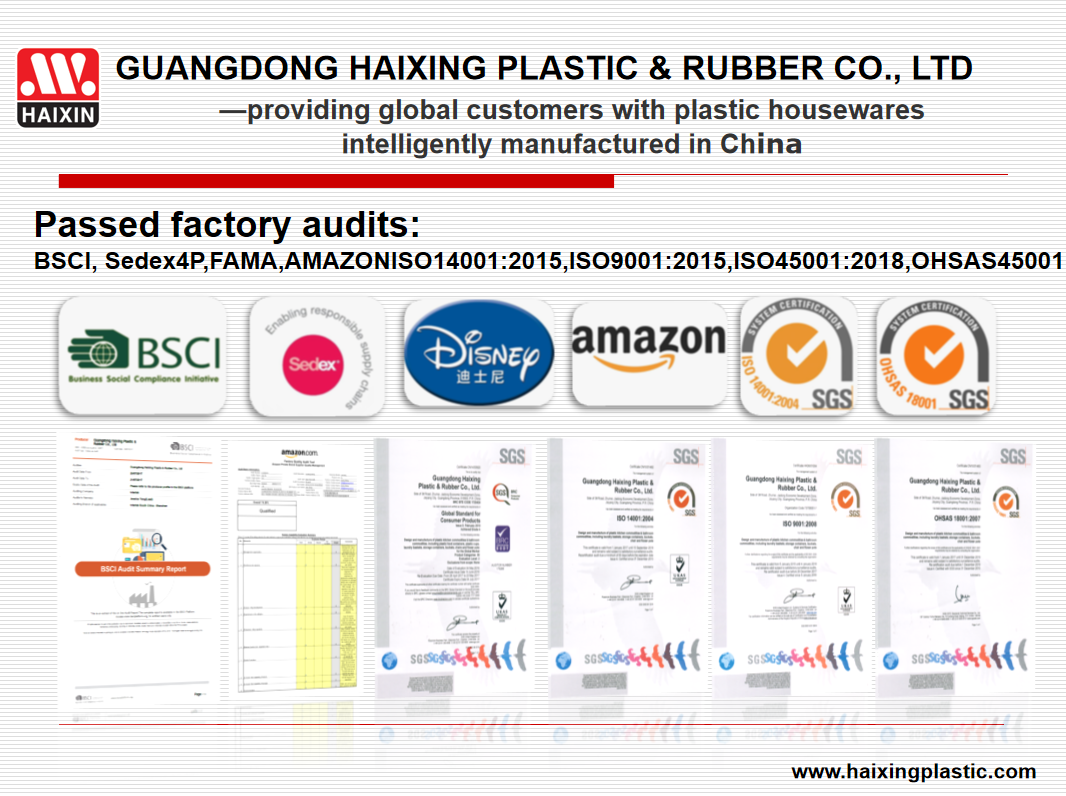

Certifications are more than just badges—they’re proof of a supplier’s commitment to quality and safety. At Haixin, we’ve invested heavily in obtaining and maintaining certifications like BSCI and SEDEX, which validate our ethical labor practices and environmental standards.
For product safety, our FDA and LFGB certifications are non-negotiable. These ensure our materials and finished goods are free from harmful chemicals, making them safe for food contact and household use.
We also undergo regular audits by Disney and Walmart, two of the most stringent inspectors in the industry. These audits cover everything from factory conditions to traceability systems, ensuring complete transparency.
By choosing a certified supplier like Haixin, you’re not just buying products—you’re investing in peace of mind.
Why Use Third-Party Inspection for Bulk Plastic Orders?
Even the best suppliers can miss defects. That’s why third-party inspections are a must for bulk orders. Here’s how they add value.
Third-party inspections provide an unbiased quality assessment, catching defects before shipment.
Third-party inspections act as a safety net, catching issues that might slip through internal checks.
For bulk orders, inspectors conduct AQL (Acceptable Quality Level) sampling, checking for defects in size, color, and functionality. They also verify packaging and labeling, ensuring compliance with destination market requirements.
A recent example is a 10,000-piece order for a US retailer. During the inspection, a minor color variation was detected. Thanks to this early warning, we adjusted the dye formula and avoided a costly return.
We also use third-party inspectors to validate our social and environmental compliance, which is increasingly important for brands targeting eco-conscious consumers. By combining internal and external checks, we deliver products that exceed expectations.
Conclusion
Preventing quality issues in plastic housewares demands expertise, technology, and transparency. At Haixin, we’ve built our reputation on delivering all three.
GUANGDONG HAIXING PLASTIC&RUBBER CO. LTD.
Why Are Recycled Products More Expensive?
Related Article

1. Quality
2. Reliability
3. Customization options
4. Clear Communication
5. Environmental responsibility